
VO2 max is a measure of the maximal volume of oxygen your body can use and it’s a good indicator of cardiovascular fitness. A true VO2 max test is conducted in a lab and involves exercising to failure while wearing a mask.
However, there are simple tests that can provide an estimate of your VO2 max. I’ve previously covered the Queen’s College step test, and the Rockport Walking Test. Both of those are sub-maximal tests, one common option for maximal testing is the Bleep Test.
What is The Bleep Test
The bleep test, also called the beep test or multi-stage fitness test, was developed in 1982 [1] as a way to assess maximal oxygen intake (VO2 max).
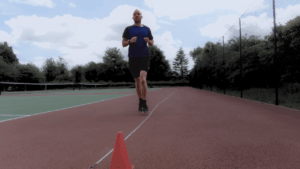
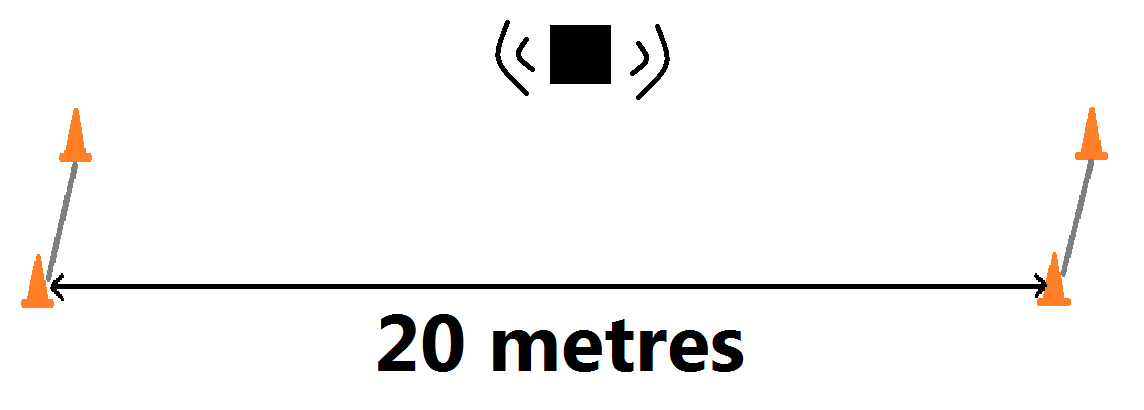
The test will be familiar to many of you who completed it during an exercise class at school. Two sets of cones are set up 20 metres apart and an audio is played with a series of beeps. The goal is to cover the 20 metres before the next beep sound, and as the test progresses the beeps get closer together.
Level 1 is the equivalent of running at 8 km/hr and after 7 shuttles you move to Level 2 (8.5 km/hr). Each level is 0.5 km/hr faster and there are between 7 and 16 shuttles on each level.
How To Do The Bleep Test
For the bleep test you will need some way of measuring and marking out 20 metres, as well as the ability to play the audio.
After a thorough warm up, start the audio and take your position at one end of the shuttle area. Sample audio can be found here. Depending your choice of audio device I would suggest either placing it halfway between the cones or carrying it with you as you run.
At the first beep, make your way across to the other end of the shuttle area. Your goal is to touch your foot at the other end before the next beep, and there’s no need to run beyond it. As each new level is announced, the time between the beeps will reduce. It can take some getting used to so you are allowed to miss one beep, but not two in a row. Once you are no longer fast enough to reach the cones you have completed the test. Make sure you remember the level and shuttle you managed to reach.
For example, I reached the line in time for Level 9 Shuttle 11 but did not make the next cone. Entering level 9 shuttle 11 into the formula here produces an estimated VO2 max of 46.57 ml/kg/min.
Contraindications
Before you go out and run, there are certain individuals for whom exercise testing is contraindicative. Below are the most common conditions that may prevent you from safely completing this test.
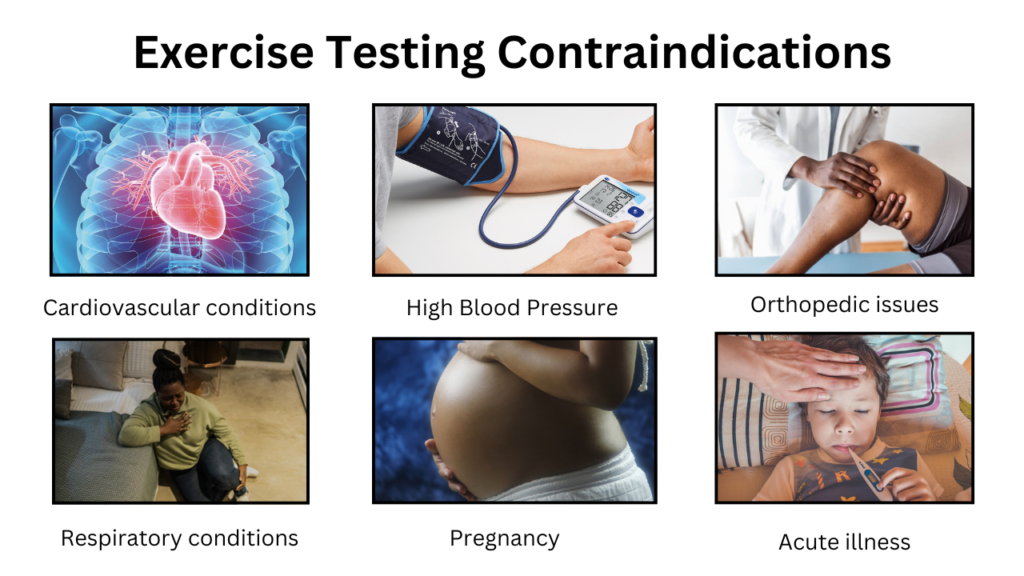
As this is a maximum effort test, it’s worth speaking to your doctor if you’re in any doubt whether this test is safe for you to do.
What do my results mean
The level and shuttle you reached before you were no longer able to reach the next cone in time can be converted into an estimated VO2 max. A conversion calculator can be found here, and below are some example VO2 max scores.
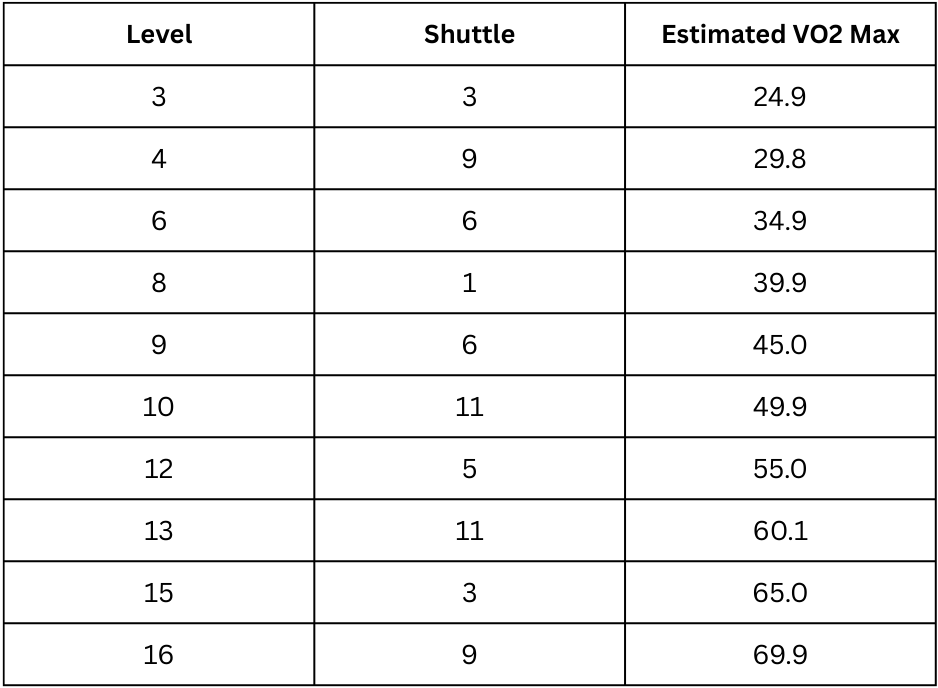
Your results are best compared relative to others of the same age and sex. Below is a set of normative data for VO2 max for both men and women. What constitutes “average” can vary between research studies due to the population samples they use.
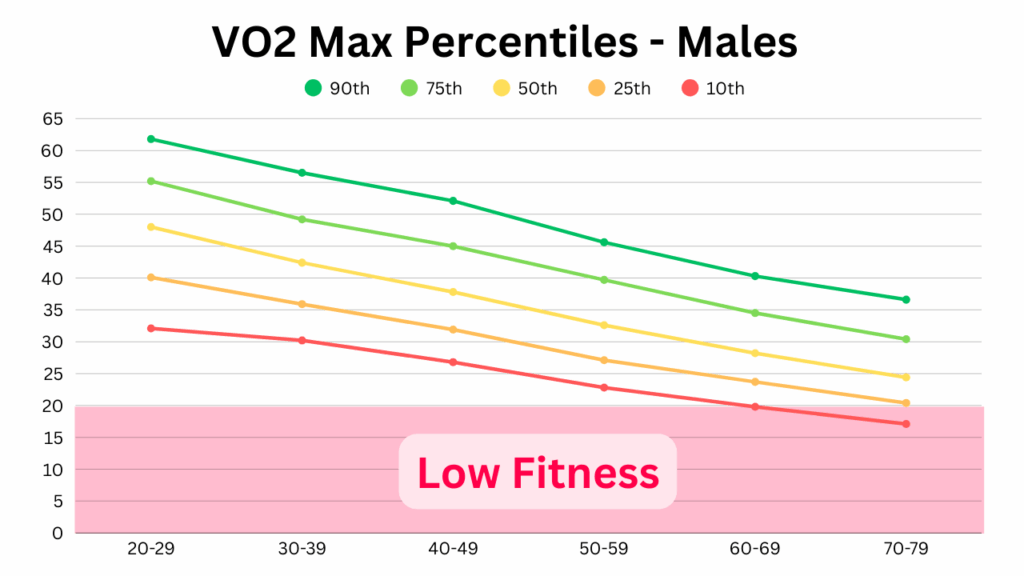
For men, an elite VO2 max would be around 60 ml/kg/min in their 20’s, down to 40 ml/kg/min in their 60’s. The average male is around 47 ml/kg/min in their 20’s and 28 ml/kg/min in their 60’s.
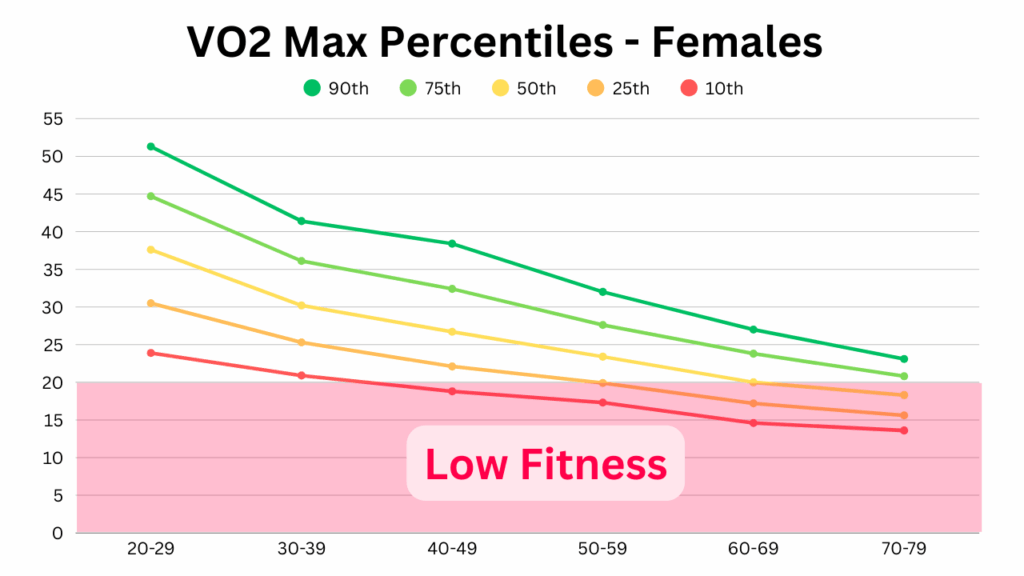
For women, an elite VO2 max would be around 50 ml/kg/min in their 20’s, down to 27 ml/kg/min in their 60’s. The average female is around 37 ml/kg/min in their 20’s and 18 ml/kg/min in their 60’s.
Note that activities of daily living become compromised once an individual falls below 20 ml/kg/min. This would mean walking uphill would be right at the limit of their capabilities.
At the top end, elite athletes average 55-65 ml/kg/min with endurance specialists able to reach 75-85 ml/kg/min. Cross Country Skiers are often touted as the athletes who score the highest, with some managing to score 90-95 ml/kg/min on their VO2 max tests.
Tracking VO2 max over time
There is a very well established decline in VO2 max with age, and that happens regardless of fitness level. The difference is that a fitter individual will remain at a higher level relative to the unfit individual as they both age.
While it’s a relatively intense test to take, completing it once a year will help you track fitness over time. People typically lose 1% of their VO2 max a year, so even if you maintain your activity levels, you will see a decline with age. Here I’ve included my results, which come from a range of different tests including maximal tests like the Cooper Test, Bleep Test and 2000m row.
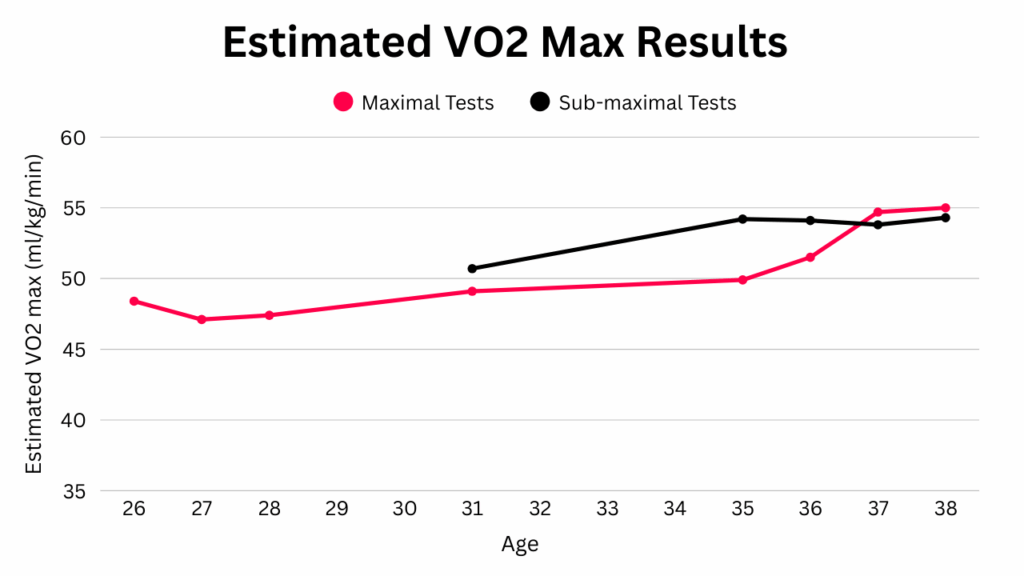
One important point to remember about a maximal test is that it requires a much higher degree of motivation. It’s worth selecting a maximal test that you feel confident about completing to the best of your ability. It may also be worth taking a submaximal test and comparing results.
[1 ] A maximal multistage 20-m shuttle run test to predict VO2 max, Leger, Lamber, 1982
